













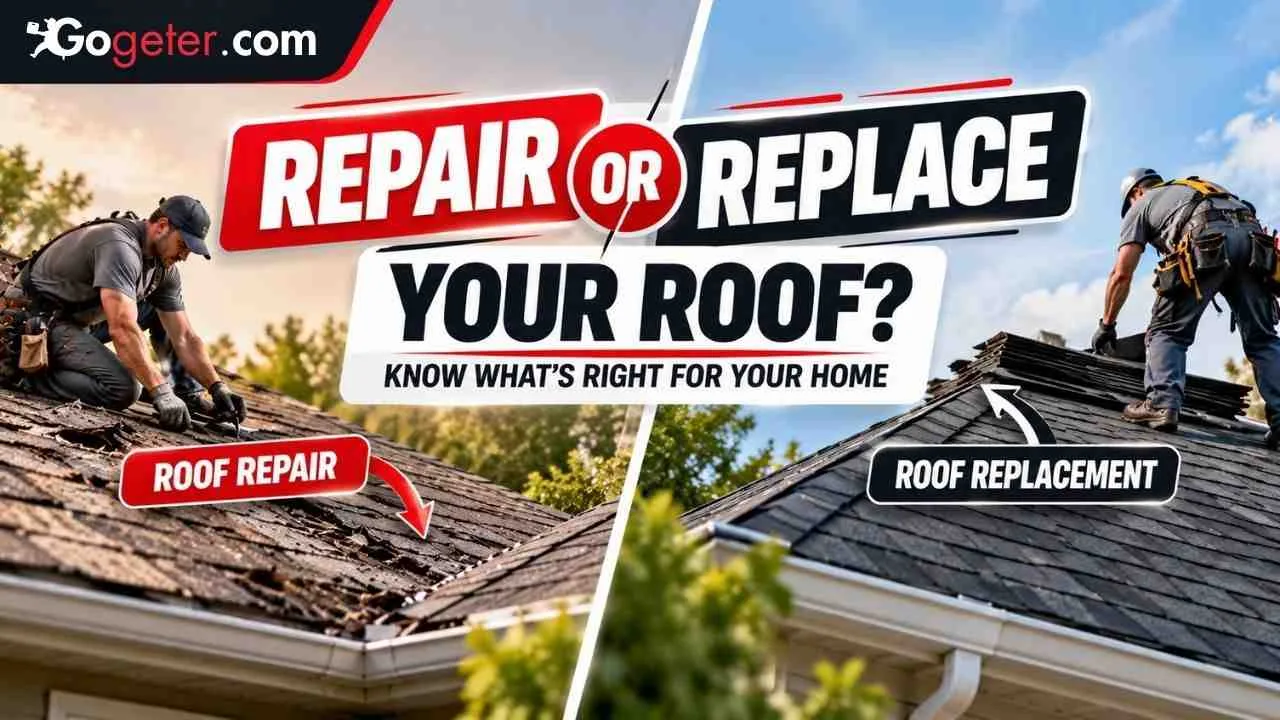
No roof ever fails all at once. It starts small: a brown stain on the ceiling, a couple of shingles in the yard after a storm, or a roof that’s slowly ageing. Then comes the big decision: should I repair or replace my roof?
One roofer says a fast fix will suffice. Another quotes a complete replacement. Damaged roofs can be a gamble, especially with the five-figure cost of replacing one, whether you’re deciding to repair or replace your roof.
This guide makes it clear. You'll learn what risks you should be aware of, how long each type of roof lasts, how much damage changes things, how much each choice costs, and the choices in the middle that most quotes skip. First, the good news: just because your roof has a leak doesn't mean you need a new one.
What Are the Warning Signs of Roof Damage?
Your roof generally gives you a heads-up when something’s wrong. The trick is figuring out which signs of roof damage are purely cosmetic and which mean you need a new roof.
Signs You Can Spot From the Ground and the Attic
You don’t need a ladder to begin with. A slow walk around the house and a brief attic check will reveal most problems. From the outside, look for missing, cracked, or curling shingles; granules in the gutters; slipped tiles; and any dips in the roofline.
Look for water stains on the rafters in the attic, damp insulation or daylight through the boards. Streaks, moss and fading are largely cosmetic problems. If you see curling, cracking, sagging, and rot, these are structural roof replacement signs you should not ignore. Here’s what each symptom typically signifies when it comes to roof repair vs. roof replacement:
| Warning Sign | Likely Cause | Usual Fix |
|---|---|---|
| A few missing or cracked shingles | Wind or minor impact | Spot repair |
| Leak around a chimney or vent | Worn flashing or seal | Flashing repair |
| Granules in the gutters | Normal aging | Monitor and inspect yearly |
| Widespread curling or bald spots | Roof near end of life | Likely replacement |
| Cracked or slipped tiles | Storm or foot traffic | Replace tiles, check underlayment |
| Sagging or spongy areas | Rotted decking | Structural repair or replacement |
| Leaks in several rooms | Widespread failure | Likely replacement |
Does a Roof Leak Mean You Need a New Roof?
This is the panic question. The answer is generally no. Can a leaking roof be repaired? Yes. In most circumstances. Most leaks are only one leak caused by ageing flashing, a cracked vent boot or a few broken shingles. A simple roof leak repair will do the trick.
If water is on the surface, it's a repair. The real answer to "should I replace my roof if it leaks" is whether water has soaked into the decking or insulation. But don’t wait. A repair can become a replacement when a small leak goes unattended, water feeds mould, and the decking rots. Step one is to spot damage. But how much life your roof has left can change how significant that damage is.
How Long Does a Roof Last Before Replacement?
For a roof, age is a clue, not a verdict. A 12-year-old neglected roof will not endure as long as a 20 year old well maintained roof, yet all materials have a life span. Knowing how long a roof lasts before replacement helps you decide whether a repair is worth the money. So, how long should a roof last? Rough guide by material:
| Roof Material | Typical Lifespan | Main Failure Sign to Watch For |
|---|---|---|
| 3-tab asphalt shingles | About 15–20 years | Curling, granule loss |
| Architectural asphalt shingles | About 20–30 years | Cracking, bald spots |
| Metal roofing | 30–50 years | Loose fasteners, rust |
| Clay tile | 50–100 years | Worn underlayment under intact tiles |
| Concrete tile | Similar to clay | Worn underlayment, cracked tiles |
| Flat roof (foam or coating) | Varies, coating needs renewing | Ponding water, surface cracks |
| Slate | 50–150 years | Slipped or flaking slates |
Can an Old Roof Be Repaired?
Sometimes, but the older a roof gets, the less a repair will do. Repairs are often temporary patches when an asphalt roof is about 15–18 years old, and that’s often the clearest sign you need to replace your roof.
Tile roofing is another story. Tiles can last for decades, but the underlayment underneath them wears out, so replacing the underlayment can stop leaks and save the tiles.
Climate plays a role, too. Intense sun and monsoon storms in places like Phoenix wear roofs down faster, which means an old roof there may need replacing sooner than the same roof in a milder climate. So you know the signs and your roof's age. The next question is: how much harm is too much?
When Should You Repair a Roof Instead of Replacing It?
Is it better to repair or replace a roof? Repair is often the better choice than you think. If you know where the boundary rests, a small roof repair can add years to its life.
The Quarter Rule: How Much Damage Requires a Roof Replacement?
This isn't an official standard, but a rule of thumb many roofers use to decide how much damage requires a roof replacement. If less than about a quarter of the roof is damaged and the deck under it is sound, repair usually makes sense.
The other marker is money. If you find yourself calling the roofer more than once a year, or you’re spending 25-30% of the cost of a new roof on repairs, then it’s time to replace the roof. It's the deck's call. No matter how wonderful the shingles look on top, if the decking is soft, rotten, or sagging, you'll need roof structural repair or a full replacement.
Partial Replacement, Restoration and Re-Roofing: The Middle Options
That’s what most quotes leave out. Can you repair instead of replace a roof? Yes, very often. There are some alternatives to roof replacement in between:
- Partial roof replacement: Replace one damaged slope. It is less expensive, but the new shingles may not match the faded ones.
- Roof restoration: A coating option for ageing but sound flat or low-slope roofs common in Phoenix. Roof restoration vs replacement can add years to your roof at a fraction of the expense.
- Re-roofing (overlay): New shingles installed over the existing layer. You can save money on tear-off versus re-roofing with an overlay, but codes usually won't permit it if the roof already has two layers.
Every option has a price tag. Here’s the real price of each.
Roof Repair vs Replacement Cost: What Will You Pay?
Is it cheaper to repair or replace a roof? In the short run, repair almost always wins. But the key roof repair vs. replacement cost question is: How many years of roof life does each dollar buy you? Most repairs are smaller than you think.
The average roof repair cost is $300 to $1,000, with larger works going up to $3,000. The price depends on your roof type, how steep it is, how accessible it is, and how far the damage has spread. How much does roof leak repair cost? The answer is often reassuringly inexpensive. Repairing a leak around flashing or a vent is generally at the low end. Here’s how roof replacement vs. repair expenses stack up by option:
How Much Does Roof Repair Cost?
| Scope of Work | Typical Cost | Best Suited For |
|---|---|---|
| Small spot repair | About $300–$1,000 | A few shingles, flashing, small leaks |
| Major repair | Up to about $3,000 | Larger damaged sections |
| Partial (one-slope) replacement | Varies, get a quote | Storm damage on one side |
| Flat roof restoration | Varies, get a quote | Aging but sound flat roofs |
| Tile underlayment replacement | Varies, get a quote | Leaking tile roofs with good tiles |
| Full asphalt shingle replacement | About $5,000–$10,000 | Worn-out standard roofs |
| Full metal or tile replacement | Up to $16,000 or more | Long-lasting upgrades |
New Roof Cost: What a Full Replacement Runs
That’s where the big numbers come in. How much does it cost to reroof a house? The average roof replacement costs between $5,000 and $10,000, while larger or speciality roofs can run $16,000 or more. Disposal, tear-off and permits are typically added to the cost.
The materials determine the cost per square foot of a roof. Asphalt shingles cost about $1-4/sq ft, while metal, tile, and slate cost $8-30/sq ft but last much longer. How much to replace roof on 1500 sq ft house?
Your roof’s surface area is larger than your floor space, especially on steeper roofs; therefore, always ask for a measured new roof cost quote. A new roof costs more, but is the extra money well spent?
Is Roof Replacement Worth It? Insurance, Value and Savings
A new roof is more than a bigger bill. Insurance, resale value and energy savings can all change the equation, and they often determine whether roof replacement is worth it for your home.
Will Insurance Pay for Roof Repair or Replacement? It depends upon why the roof was damaged in the first place. Most roof damage insurance coverage covers storm damage roof repair, which involves abrupt events like hail, high winds or a falling tree. Normal wear and tear due to age normally isn't covered. Different policies offer different coverage amounts and compensation, so check your policy or call your insurer before you start work.
The Hidden Benefits of a New Roof
Some of the payoff is never on the bill. A new roof increases curb appeal and can make your property easier to sell. Residential roof repair is also a chance to upgrade to “cool roof” materials, which can help reduce cooling expenses in hot areas.
Every new roof installation includes a new guarantee and true peace of mind when storm season arrives. Now you have all the pieces: signs, age, damage, possibilities, pricing and value. Time to unite them all.
Should I Repair or Replace My Roof? A Simple Way to Decide
As the Quick Answer stated, whether you should repair or replace your roof depends on three things: the damage, the condition of the deck and how much life your roof has left. If you still aren’t sure how to identify whether your roof needs replacing, find the circumstance closest to yours below:
| Your Situation | Recommended Action | Why |
|---|---|---|
| Roof under 10–15 years, one small problem | Repair | Plenty of life left |
| Roof past most of its lifespan | Replace | Repairs become short-term fixes |
| Mid-life roof, damage on one slope | Partial replacement | Fix only the damaged side |
| Selling in a year or two | Repair, unless inspectors will flag it | Avoids overspending before a sale |
| Storm damage, possible claim | Call your insurer first | See the insurance section above |
| Already two layers of shingles | Full tear-off and replacement | Codes usually block a third layer |
| Aging but sound flat roof | Restoration | Adds years without a tear-off |
Questions to Ask a Roofing Contractor Before You Decide
A good roofing contractor will show you proof, not just a price. Before you sign anything, ask for dated photos, moisture checks, percentage of roof damage and a written assessment of the deck.
Ask whether there’s an option for repair, partial replacement, or restoration rather than a full tear-off, and whether permits are included. It’s also good to ask about warranties, since many roofers provide their own warranty coverage in addition to the manufacturer’s warranty on materials.
Compare at least two roof repair quotes, and if someone pushes replacement without documentation, get a second opinion. Moving ahead, book a roof inspection annually and following every major storm.
Find Trusted Roofers Near You on GoGeter
Compare before you commit, and act fast after a storm. If your roof was just hit, take dated photos, have a pro tarp the damaged area, and call your insurer. Beware of door-to-door “storm chasers” who want you to sign on the spot.
Need a roof repair near me or full roof replacement near me? GoGeter makes it easy to compare local roofing pros on reviews and price in one spot. Look for licensed and insured roofers with experience in your roof type, whether it’s shingle, tile or flat.
Check our guide to red flags when hiring a home service pro before hiring. Storm damage or active leak? Book roofer today with GoGeter or read our emergency roof repair guide. Here are some brief answers to a few things homeowners still ask before you call.
Repair or Replace: Making the Right Call for Your Roof
When you know what to look for, the decision between roof repair and replacement becomes a lot easier. Repair targets targeted faults on a sound roof, while replacement resets a worn-out or structurally broken one. Partial replacement, restoration and re-roofing are in between.
You know that ceiling stain at the start? Now you know it could be a simple flashing fix or a sign of something more, and how to tell the difference. The easy part is next.
Watch for signs, assess your roof's age and condition, and get a formal inspection before signing anything. No more guessing. No more being pushed into a roof you don't need. Ready? Book a trusted Roofer on GoGeter immediately.


Discussion 0
Comments are open to signed-in members soon.