













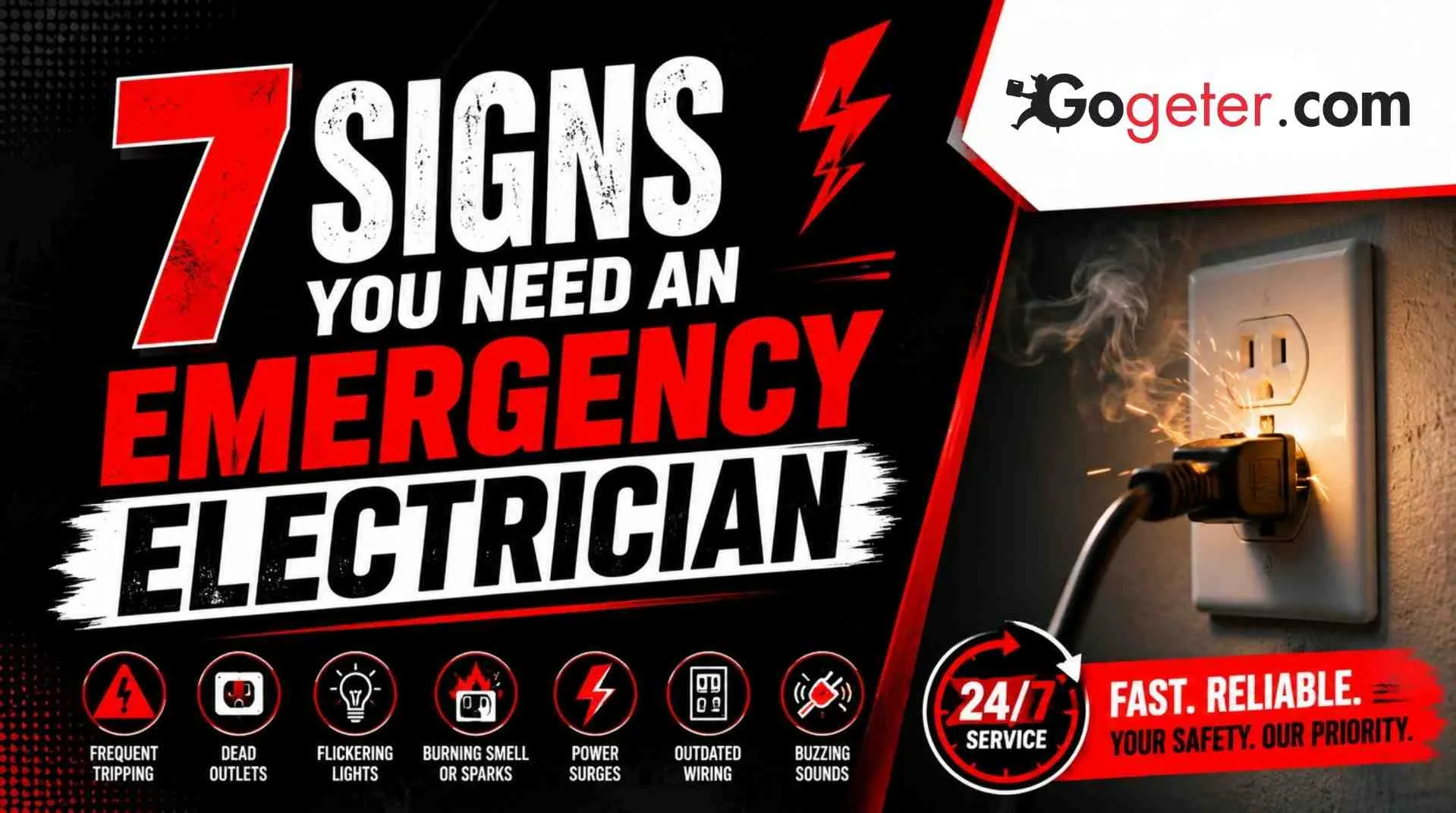
When something goes wrong with your home's electricity- a sparking outlet, a burning smell, a breaker that keeps tripping - it's hard to know whether you can wait or need help right now. Most small glitches are harmless. But some are real warning signs of an electrical emergency, the kind that can lead to a shock or a fire if ignored.
That's what an emergency electrician is for. This guide covers the clearest signs you need an emergency electrician, when to call one, and how to stay safe until help arrives. Need help now? Compare verified local professionals available near you.
What Is an Emergency Electrician and When Do You Need One?
An emergency electrician is a licensed professional who can fix electrical problems right away that can't wait until their regular appointment. When there's a risk of fire, shock, or a total loss of power, they show up fast, often within the hour, day or night, to make your home safe again.
The difference comes down to risk. Your porch light dimming can wait until next week, but the burning smell from your panel has to be fixed right away. To know when to call an emergency electrician, you need to be able to tell what kind of problem you have.
What an Emergency Electrician Handles
So what does an emergency electrician actually do? They diagnose and fix the dangerous stuff: sparking outlets, overheating wiring, dead circuits, and panels that trip or buzz. A true 24-hour emergency electrician will answer at 2 a.m. and come out the same night.
They also make sure the repair holds up, checking the surrounding wiring and flagging anything else that's unsafe. Emergency electrical services are more than just restoring power; they are about restoring safety.
When a Problem Becomes an Emergency
Not every electrical issue is urgent. But some cross a clear line, the moment you can smell, see, or hear that something's wrong.
Here's a simple way to think about it. If there's heat, sparks, a burning smell, or the power suddenly cuts out for no reason, don't wait it out. That's when to call an emergency electrician right away. The seven signs below are the ones you should never ignore.
7 Warning Signs You Need an Emergency Electrician
Most electrical problems give you a warning before they turn serious. The trick is knowing which signs call for an emergency electrician and which can wait for a routine visit.
So how do you know if an electrical problem is an emergency? These seven are the clearest signs of electrical problems that require prompt action. If you spot any of them, take them seriously; these are dangerous electrical problems that can cause a shock or a fire.

1. Sparking Electrical Outlets
If you put something in, you might see a quick spark. But outlets that flash, snap, or spark repeatedly aren't normal; they usually mean the wiring is loose or there is a short circuit behind the wall, where electricity is jumping across a gap instead of flowing smoothly.
Those sparks can catch on fire or on insulation in seconds, making them real electrical fire hazards. Stop using the outlet, keep it clear, and get a pro to check it fast.
2. Burning Smell From an Electrical Outlet
A burning or fishy plastic smell near an outlet is one of the most urgent warnings you can get. That smell is usually from overheated wiring or melting insulation behind the wall, with the plastic itself breaking down from heat.
A burning smell coming from an outlet is one of those dangerous electrical problems you never wait on. Switch off the power to that area and call for help right away.
3. Circuit Breaker Keeps Tripping
A breaker that trips once in a while is doing its job, cutting power before a line overloads. But when your circuit breaker keeps tripping over and over, something on that line is wrong.
Often, it means the electrical circuit is overloaded, there is a short circuit, or there is a hidden fault that draws too much power. Every time you turn it back on, you send power back into a circuit that's already telling you it can't handle the load.
4. Flickering Lights
The lights should only dim briefly when a large object turns on. But steady or broad flickering is a common electrical issue that you should check out. This could mean that your electrical wiring is damaged, you have a loose connection in your panel, or a circuit is struggling to handle an excessive demand. If the flickering is moving from room to room or keeps coming back, have it checked out before it gets worse.
5. Buzzing Electrical Outlet
The outlets need to be silent. If an electrical outlet buzzes, it's likely because electricity is flowing through a loose or broken connection in the wall, causing it to take a path it shouldn't. Arcing is a leading cause of electrical fires, so this is one to act on quickly. Cut the power to that outlet and book an urgent electrical repair before using it again.
6. Warm or Discoloured Switch Plates
Plugs and switch plates should always feel cool. If one is warm to the touch or has brown, yellow, or burned marks on it, heat is building up behind it. This is usually because the connection is loose or the outlet is worn out from years of use. That heat is a serious electrical safety hazard and a sign of trouble in the wiring. Don't keep using it; warm or discoloured plates are common electrical fire hazards that need a pro's eyes fast.
7. Power Outage Inside Your Home
Only if your power goes out, but your neighbours still have theirs, is the problem inside your home, not the grid. That kind of power outage electrical issue usually points to your own wiring or panel. It often traces back to electrical panel problems, such as a failing breaker, a loose main connection, or an overloaded service that can't keep up. Call a 24/7 emergency electrician to safely locate the fault, since panel work is never a DIY job.
A quick safety note: These signs share one thing in common: they're not DIY territory. Electrical faults can hide behind walls, and what looks like a simple fix can pose a live-shock or fire risk. If you spot any of the signs above, cut the power if it's safe to do so and let a licensed emergency electrician handle the rest.
When to Call an Emergency Electrician (and When It Can Wait)
If you have an electricity problem, you don't always have to call someone at midnight. Some can wait until a planned visit, but others need to be addressed before you touch anything else. It's hard to tell them apart at the time.
So can some electrical problems wait until morning? Sometimes, yes, a single dead outlet or a burned-out bulb isn't an emergency. But anything involving heat, smoke, sparks, or a sudden loss of power is a true electrical emergency, and that's exactly when to call an emergency electrician right away.
The table below sorts common situations by risk level, so you can quickly see what needs urgent electrical repair and what can safely wait.
| Risk Level |
What You Notice |
Do This Now |
|---|---|---|
| Critical |
Burning smell, smoke, or visible sparks |
Turn off the power and call a 24-hour emergency electrician immediately |
| Critical |
Repeated breaker trips or a buzzing outlet |
Stop using it and book emergency electrical repair |
| Urgent |
Whole-home power outage (neighbors still have power) |
Check the electrical panel with a 24/7 emergency electrician |
| Urgent |
Warm switch plate or scorch marks |
Isolate the circuit and request urgent electrical repair |
| Low |
One outlet not working while the rest of the home has power |
Schedule a standard electrical repair visit |
| None |
Burned-out light bulb |
Replace the bulb-no electrician needed |
| None |
Installing a new light or power outlet |
Book a regular, non-urgent appointment |
When you're not sure which row you're in, treat the problem as more serious rather than less. It's always cheaper to have a pro check a false alarm than to wait on something that turns into a fire. Next, let's look at the electrical emergencies that most often occur in homes.
Common Electrical Emergencies at Home
Some electrical emergencies show up again and again in homes, no matter the age of the house. Knowing the usual culprits helps you catch a problem early, and understand why a pro takes it seriously. So what are the most common home electrical emergencies? Most residential electrical emergency calls trace back to a handful of causes. A few everyday situations make them far more likely

What Triggers Most Home Electrical Emergencies
Before the fault itself, there's usually a setup that invites it. These are the everyday situations that push a home toward trouble:
- Older homes running modern appliances on wiring that was never built for the load.
- Too many devices on one circuit; space heaters, microwaves, and window AC units are common offenders.
- Water and electricity meeting near kitchen, bathroom, or outdoor outlets.
- DIY or ageing repairs that left loose connections or faulty electrical wiring behind the walls.
Any of these can lead to the emergencies below. The table breaks down the ones we see most often, along with their causes and why they're risky.
| Electrical Emergency |
Likely Cause |
Main Risk |
|---|---|---|
| Overloaded Electrical Circuit |
Too many appliances on one circuit |
Overheating and electrical fire hazards |
| Faulty Electrical Wiring |
Old, damaged, or poorly installed wiring |
Electric shock and hidden fire risk |
| Electrical Panel Problems |
Worn breakers or loose connections |
Power failure and heat build-up |
| Water |
Contact with Wiring Leaks or flooding near electrical outlets |
Severe electric shock hazard |
| Frequent Power Outages |
Internal electrical fault rather than a utility issue |
Damage to appliances and home safety systems |
What ties most of these together is that they build slowly, then fail suddenly. A loose connection or an overloaded line can sit quietly for months before it sparks, trips, or overheats. That's why catching these electrical problems at home early and having them checked is the safest move you can make. Next, here's how to find a trustworthy pro when you need one.
How to Choose a Licensed Emergency Electrician
When something's sparking or smoking, you don't have time to vet five companies. But a few quick checks help you pick someone safe, even under pressure,and avoid the ones who cut corners. So how do you find a trustworthy emergency electrician near you? It comes down to two things: proof they're qualified, and proof they can actually show up fast.
Check Their Credentials and Insurance
Always start with getting a license. A licensed emergency electrician has been trained and tested to ensure they follow safety rules. This is very important when working on live wires or your panel. Also, insurance is very important. Any harm or damage done on the job by an emergency electrician who isn't insured could be your responsibility. You can avoid that risk by quickly checking their license number and proof of insurance.
Confirm Availability and Local Response
You can only use an emergency electrician service if they pick up the phone when you call. Look for real 24/7 service, not just a voicemail answered the next morning.
Location matters too. A local emergency electrician reaches you faster in a crisis, which can be the difference between a small repair and real damage. Searching for an emergency electrician near you usually surfaces the closest, quickest options first.
Before you book, run through the quick checklist below.
| What to Check |
Why It Matters |
|---|---|
| Valid License and Insurance |
Confirms a licensed emergency electrician who meets safety standards |
| 24/7 Availability |
Ensures true 24-hour emergency electrician service whenever you need it |
| Local Presence |
A local emergency electrician can reach you faster during an emergency |
| Clear Upfront Pricing |
Helps avoid unexpected costs during urgent electrical repairs |
| Verified Reviews |
Shows a reliable history of emergency electrical service |
If you go through these five, you'll quickly know if a pro is worth calling. You can find approved local electricians on GoGeter and compare them all in one place. This means that the screening is already done for you. Now, learn how to stay safe while you wait for help.
How to Stay Safe Until Help Arrives
Once you've called for help, the minutes before the electrician arrives matter. A few simple steps keep a bad situation from getting worse and keep everyone out of harm's way. So what should you do while waiting for the emergency electrician? The goal is simple: reduce the risk; don't try to fix it. Most electrical safety hazards get worse when people poke at them, so stay clear and stay calm.
What to Do First
As soon as it's safe to do so, turn off the power at the main panel. This is the fastest way to stop electrical fire risks while you wait. Then keep people and pets away from the broken panel, plug, or switch. Home electricity safety in an emergency is mostly about how far away you are.
What to Avoid
Don't keep resetting a circuit breaker that keeps tripping, and don't touch anything wet or sparking. Also, never pour water on an electrical fire, because water conducts electricity and can make it worse. Most importantly, don't try to fix live wires yourself. Trying to fix these electricity problems on your own could cause shocks or fires.
The quick reference below sums up the do's and don'ts at a glance.
| Do |
Don't |
|---|---|
| Switch off the main power if it is safe to do so |
Don't touch wet or sparking outlets |
| Keep everyone away from the affected area |
Don't keep resetting a tripping breaker |
| Unplug nearby appliances only if it is safe |
Don't use water on an electrical fire |
| Keep a flashlight and your phone nearby |
Don't attempt DIY repairs on live electrical wiring |

Have This Ready When the Electrician Arrives
A little planning ahead of time helps the pro find and fix the problem faster:
- A clear path to your panel and the plugs that are broken.
- A quick rundown of what happened and when it began.
- Tell them about any sounds, smells, or sparks that caught their attention.
These keep everyone safe until a pro takes over. Below, we've answered the questions homeowners ask most about electrical emergencies.
How GoGeter Helps You Find an Emergency Electrician Fast
When it's an emergency, the last thing you want is to call around comparing electricians one by one. GoGeter does that part for you. You don't have to guess who to trust; you can compare verified local pros in one place that shows their licenses, availability, and real customer reviews. That means fixing the problem faster and safer will take less time.
Every emergency electrician on GoGeter is a verified local professional, so you're not rolling the dice on a name from a random search. You see who's available near you, what they charge, and how past customers rate them, then book with confidence. Ready to get help? Compare trusted local electricians near you and book in minutes.
Conclusion: Act Fast to Protect Your Home
Electrical emergencies rarely announce themselves politely. They show up as a smell, a spark, a flicker, or sudden silence, and reading those signs early is what keeps a small fault from becoming a disaster. The rule is simple: when something feels dangerous, it usually is. Cut the power if it's safe, and bring in a pro rather than waiting it out. A quick call to an emergency electrician is always cheaper than ignoring the warning. Facing an electrical emergency? Find a trusted local electrician near you and get help today.


Discussion 0
No comments yet — be the first to share a thought.