











Your drain is slow again. Or maybe you’ve paid to have it cleared before, or a plumber has given you two options with very different price tags: snaking or hydro jetting.
So which drain cleaning method do you really need? Is hydro jetting better than snaking or just more expensive? Here’s the plain reality about hydro jetting vs. snaking: one clears the clog; the other clears the entire pipe. That's what you should be paying for that difference.
This guide explains how each one works, which one can handle tree roots and grease, and whether jetting is safe for older pipes. You’ll also see actual expenses, how long results last, and an easy way to decide. But first, a hint: if you’ve paid to clear the same drain twice, the problem is probably not the clog.
What Causes Drain and Sewer Line Clogs?
You can't pick the correct fix until you know what's in the pipe. A clogged drain is usually the result of a few common everyday offenders:
- Bathroom drains: hair and soap scum
- Wipes and excessive toilet paper
- Kitchen grease becomes solid on cooling
- Roots of trees growing into older sewer lines
- Mineral scale, frequent in hard water places like Phoenix and Texas
There are two sorts of them. A blockage is something that gets in the way. Buildup is a coating that slowly lines the pipe walls. Remember this difference, since it will determine what kind of drain cleaning will truly work.
Signs It's More Than a Simple Clog
Warning flags lead past a single sink to your main line. Search for:
- Many slow drains at once
- Toilets beeping when water is run
- Smell of sewer in house
- Water standing in your tub or shower
- The same drain plugging up again in months
Any of these could be a clogged sewer line. That is often where a hydro jetting main sewer line service comes in, but not always. Now you know what you are up against. What each tool actually performs inside your pipe.
Hydro Jetting vs Snaking: How Each Drain Cleaning Method Works
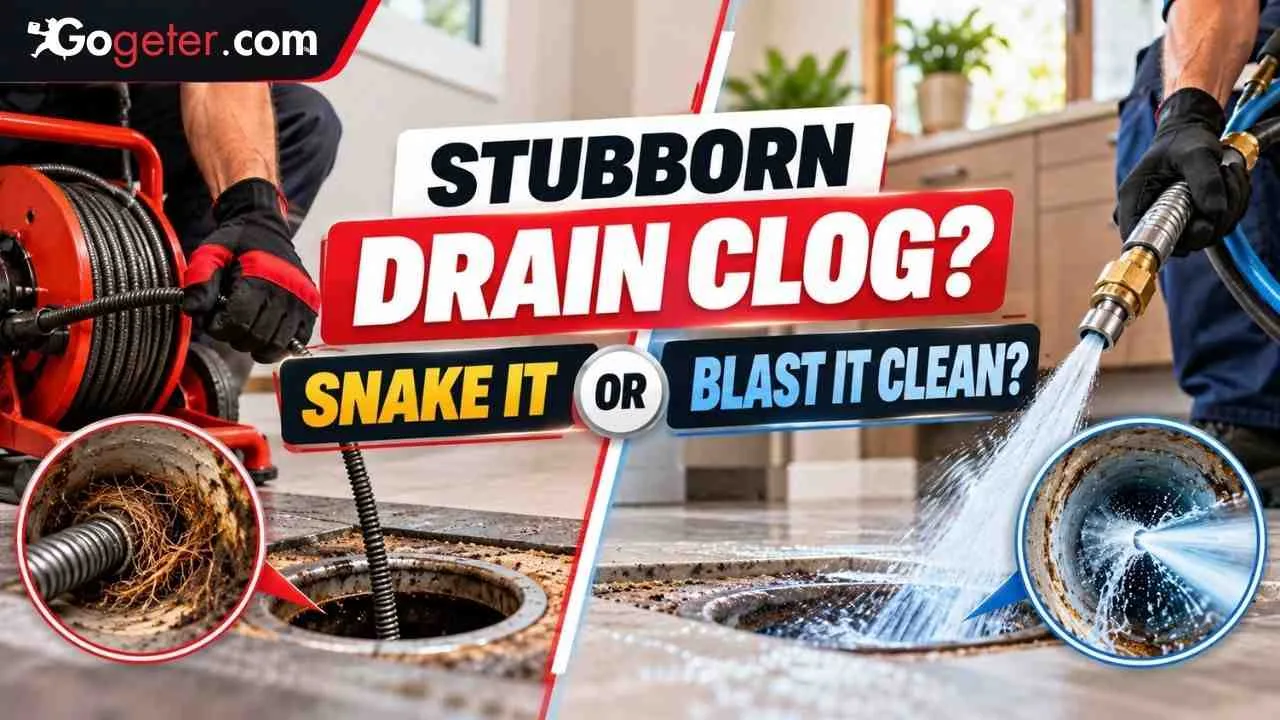
Hydro jetting and drain snaking both help to get water moving again. What they leave behind is what counts. That is the heart of the hydrojet vs snake debate, so let’s peek inside the pipe.
Drain Snaking: Punching a Path Through the Clog
This is the classic fix most plumbers reach for first. Drain snaking uses a long, flexible cable with a cutting tip. When it hits the clog, it either breaks it or hooks it out. It's fast, usually under an hour for a single drain. But it just opens 2-3 inches. Any oil or scale on the walls stays exactly where it was.
Hydro Jetting: Scouring the Whole Pipe Clean
Think of it as a pressure washer for your pipes. Water is sprayed from a hose with a specific nozzle at about 3,000–4,000 PSI. The hose moves forward, with jets slicing through the plug and backward jets scouring the pipe walls.
The continuous flow of water flushes the line, transporting sludge, grease, and root fragments out, while pressure does the cutting. So you come out with a clean pipe, not a hole in the muck.
You may also hear it termed sewer jetting or hydro flushing sewer lines. It’s the same service, just called various things. Here’s the sewer jetter vs snake difference brief:
| Feature | Drain Snaking | Hydro Jetting |
|---|---|---|
| Tool used | Spinning metal cable | High-pressure hose and nozzle |
| How it clears | Breaks or hooks the clog | Cuts the clog and scrubs the walls |
| What it removes | Hair, wipes, small objects | Grease, sludge, scale and roots |
| Path left in pipe | About 2–3 inches | Full pipe width |
| Typical job time | Often under an hour | About 1–4 hours, including camera inspection |
| DIY possible? | Yes, for small drains | No, it needs a pro |
Knowing how they work leads to the real question: which one does the better job?
Is Hydro Jetting Better Than Snaking?
Remember the difference between blockage and build-up? And that's what settles the question. Hydro jetting cleans deeper, but a deeper clean is not always what your drain needs. So does hydro jetting work better every time? Yes, for buildup; on a simple blockage, a snake can usually do the same work for a fraction of the cost.
Tree Roots and Grease: Which Method Clears Them for Good?
The major difference between the two methods is roots and grease, since both stick to the pipe walls rather than sitting in one place. In the hydro jetting vs snaking tree roots matchup, a snake makes a channel through the root mass, but the fine root hairs are left behind. These hairs retain debris and tend to get blocked again within 6-12 months.
So, does hydro jetting remove roots? It pulls out heavy masses and thin hair strands, and it removes grease from the walls. The clearest sign you need hydro jetting is roots or oil that keeps coming back.
When Snaking Is Still the Smarter Choice
If the problem is minor and easy to explain, you don’t need to pay for a deep clean. Knowing when to snake a drain saves you money. If it's the first clog in that line, only one fixture is slow, or you know the cause, such as a toy or wad of wipes, a snake will generally clear it quickly.
With newer PVC pipes and no root problems, you rarely need more. Then it's an easy option between snake vs hydrojet. Start with the snake. Save the jetting for recurring problems.
| Clog Type | Better Method | Why |
|---|---|---|
| Hair or soap | Snaking | Small, local clog |
| Object in toilet | Snaking | Cable hooks it out |
| Wipes or paper | Snaking | Breaks up soft blockages |
| Kitchen grease | Hydro jetting | Strips coated walls |
| Tree roots | Hydro jetting | Removes roots and root hairs |
| Hard water scale | Hydro jetting | Scours hardened buildup |
| Clogs that keep returning | Hydro jetting | Clears the buildup behind them |
Jetting obviously cleans deeper. But all that stress makes good sense: is it okay for your pipes?
Can Hydro Jetting Damage Pipes? How to Know If Yours Are Safe
It can if it goes down the wrong hole. Water under 3,000- 4,000 PSI is strong enough to take out a line that’s already broken or falling apart. The good news is that you don’t have to guess. Before work starts, you can check whether hydro jetting is safe for your home's pipes.
Is Hydro Jetting Safe for Old Pipes? Age isn't the determining factor. What matters is the current condition of your pipes. Jetting is generally safe on PVC, copper and cast iron if they are physically strong.
But can hydro jetting damage old pipes? It can split apart weakened Orangeburg, a fibre pipe used in homes built before the 1970s, as well as poorly broken clay lines. Snaking has its dangers, too. This twisting strain can shatter weak cast iron. And neither way fixes a broken line. That should be repaired or replaced.
The Camera Inspection Step You Shouldn't Skip
A brief video inspection before anyone handles the clog addresses safety. A plumber puts a small waterproof camera in the pipe to see the line's condition, find the clog, and check for roots. This is not an up-sell.
This is what avoids ordinary sewer line cleaning from becoming an expensive pipe repair. If a pro gives you a hydro jetting quote without first looking at the situation, that’s a red flag. Get a second opinion. Safe pipes. Thorough cleaning. Now the question on your wallet's mind: is the added expense worth it?
Hydro Jetting Cost vs Snaking: Is Hydro Jetting Worth It?
Snaking wins on price alone. Many homeowners object because ydro jetting for the same drain isually tcosts wo to three times gmore But today’s law is only part of the tale. Is hydro jetting worth it? So, is it? For recurrent clogs, it generally costs less over a few years.
Why Is Hydro Jetting So Expensive?
You’re paying for more than a spray of water, and knowing what you’re getting can help you decide whether the price is right. A reputable hydro jetting service has a specialised machine and a qualified specialist who sets the right pressure for your pipes.
Most pros also do a camera examination before and after, and the job takes longer than snaking, generally one to four hours. That’s actually why hydro jetting is so expensive. You’re not paying for a quick hole in the clog; you’re paying for a whole pipe cleaning. Here’s how the costs add up over time:
| Factor | Drain Snaking | Hydro Jetting |
|---|---|---|
| Single drain | About $125–$250 | About $350–$800 |
| Main sewer line | About $300–$700 | About $900–$1,500 |
| Example GoGeter listing | From $95 | From $250 |
| How long results last | Often a few months if buildup remains | Often a year or more |
| How often needed | Each time the clog returns | Every 1–2 years for prevention |
| 3-year cost with recurring clogs | $1,500+ across repeat visits | $900–$1,500, often one visit |
How Long Does Hydro Jetting Last, and How Often Should You Do It?
This is where jetting at the higher price pays its dividends. A pipe that's been properly cleaned will stay clear much longer than one that's only been snaked. How Long Does Hydro Jetting Last? A healthy line will frequently produce benefits that last a year or more.
And how often should hydro jetting be done? For properties with tree roots, excessive grease or ancient pipes, every 1-2 years is normal. Regular maintenance may also help extend the life of your sewer line.
The math is easy: Getting yourself snaked twice a year is usually more expensive than flying once. Now you know what each therapy accomplishes, whether it is safe, its cost and its longevity. The time for choosing is now.
Which Drain Cleaning Do You Need? A Simple Way to Decide
As the Quick Answer said, the difference between snaking vs hydro jetting comes down to two things: what’s in the pipe and what the pipe is built of. You are familiar with the sort of clogs; you know how to repair them. Let your home do the rest. Find the row that best matches your home:
| Your Home | Best First Step | Why |
|---|---|---|
| Newer home with PVC pipes (after 1990) | Snaking | Little buildup, so a snake handles most clogs |
| Cast iron home (1950–1980) | Camera, then likely jetting | Inner rust catches debris that jetting clears |
| Clay or Orangeburg pipes (before 1970s) | Camera inspection first | Weak pipe may not handle the pressure |
| Large trees near the sewer line | Hydro jetting | Roots grow back after snaking |
| Tight budget, first clog | Snaking | Cheapest fix that often works |
| Sewage backing up right now | Emergency plumber | Restore flow first (see below) |
| Not sure | Camera inspection | Shows the cause and pipe condition |
Snake First, Jet Later: When Using Both Makes Sense
Sometimes you don’t have to pick just one. Often, the best strategy is to use both, one after the other. When sewage backs up, a plumber typically snakes the line first to get water flowing again quickly.
After the emergency, hydro jetting for a clogged sewage line removes buildup so the blockage doesn’t come back. Some pros thread a line through just enough to fit a camera before deciding to jet.
Where to Find Hydro Jetting Service Near You
A good pro will inspect your pipes before suggesting a solution, instead of pushing the more expensive option. Searching for drain cleaning near me? GoGeter lets you compare nearby plumbers and hydro jetting professionals by reviews and price, all in one place.
Read our guide to red flags when hiring a home service pro and see if a camera inspection is included before booking. Sewage backup right now? Get a plumber today on GoGeter. Here are a few basic answers homeowners still often need before you schedule.
Hydro Jetting or Snaking: Making the Right Call
The difference between these two methods comes down to one basic idea: snaking clears the clog, while hydro jetting clears the full pipe. Both have their place, and neither is the "better" choice for every home. For a first-time blockage, misplaced toy or single slow drain, a snake is the fast, inexpensive solution.
When the same problem keeps coming back because of grease, tree roots, or mineral buildup, hydro jetting is the long-term remedy. Remember the drain you paid to clear twice? Now you know why it keeps coming back. The snake created a path but left the buildup behind, and jetting removes that buildup for good. The next step from here is simple.
Choose the right approach for your blockage type and your pipes' age and material. If you are still not convinced, ask for a camera examination beforehand. It shows you exactly what’s going on before you spend a dollar on the wrong service.
No more guessing and no more spending double for the same fix. Now you know exactly what to ask the plumber for when they come. Ready to have your drains running again? Book today with a trusted drain cleaning pro on GoGeter.
Discussion 0
No comments yet — be the first to share a thought.