












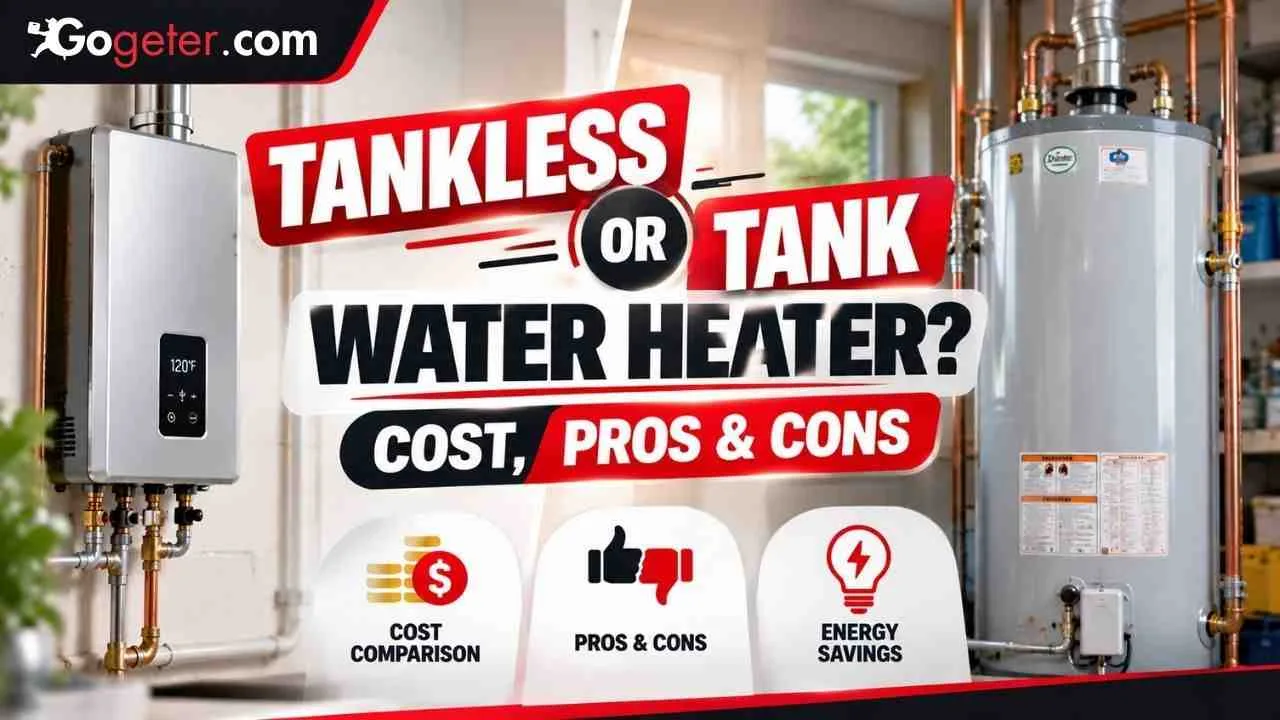
Your old water heater is acting strangely or has gone dead. Now you are looking at a tankless water heater vs a tank water heater, and each option offers something different. One is more affordable to buy. The other promises to slash expenses for years.
So, Tankless or Tank Water Heater - Which is Better? But price is only part of the story. Tankless vs tank water heater: What is the real cost? Consider installation, monthly energy use, and the device's lifespan. The choice between a tank or tankless water heater depends on how your home uses hot water.
This guide makes it simple. You will see true US price ranges, pros and downsides side by side, and explicit efficiency and longevity numbers. Then a simple table will tell you which heater fits your property. And here’s the shocker for most homeowners: the cheaper heater on day one isn’t necessarily the cheaper heater in year 10.
Tankless Water Heater vs Tank Water Heater: What's the Difference?
It all comes down to one question: does your heater store hot water, or make it only when you need it? That one difference between tankless and tank water heater designs is what drives every tank vs tankless water heater cost and pro and con you’ll read about.
That tall cylinder in the garage? It's a tank water heater, the common water heater in most houses. It keeps 40-50 liters hot 24/7 so hot water is always there. The catch? It keeps turning back on even when no one is using it. That wasted energy, known as standby heat loss, is at the core of the dispute between a hot water tank and a tankless water heater.
What Is an On-Demand (Tankless) Water Heater?
Wondering what is an on demand water heater? A tankless on demand hot water heater is just that, no tank. Open a tap and a sensor lights a burner or electric element, heating the water as it passes through.
Is a tankless water heater electric or gas? Both exist. A sufficient sized unit may provide hot water for the whole house on demand. But don't expect "instant." First the hot water has to flow via your pipes. Here's how tankless vs standard water heaters stack up: So much will each one really cost you?
| Feature | Tank | Tankless |
|---|---|---|
| How it heats | Heats and stores water | Heats water as it flows |
| Storage | 40–50 gallons | None |
| Size | Tall, about 5 ft | Suitcase-sized |
| Where it goes | Garage, basement or closet floor | Inside or outside wall |
| Venting and power | Standard vent or circuit | May need a bigger gas line, new vent or high-amp circuit |
| Fuel | Gas, propane, electric | Gas, propane, electric |
Now for the question behind every hot water heater vs tankless water heater search: what will each one actually cost you?
What You'll Really Pay: Tankless vs Tank Water Heater Cost Compared
That’s what most homeowners care about. Tankless water heater cost vs traditional tank cost: one costs more up front; the other costs more each month. Here’s how the true tankless vs. tank water heater cost stacks up.
Upfront Price: How Much More Does Tankless Cost?
Tankless almost always has a higher up-front cost. A tank unit costs roughly $300–$2,000, whereas a tankless type costs $1,000–$3,000. Whether you’re comparing a tankless electric water heater to a tank water heater or a gas unit, the tank wins at the checkout counter.
Every installation deepens the distance. Tank swaps are often $500-1,000. Tankless installations cost more, especially if your home needs a wider gas line, additional venting, or an upgrade to your electrical panel.
Local utility rebates can help close the gap, so check out what’s available when you evaluate tankless water heaters. Quick look at the full cost of owning a tankless vs. tank water heater:
| Cost Type | Tank Water Heater | Tankless Water Heater |
|---|---|---|
| Unit price | $300–$2,000 | $1,000–$3,000 |
| Installation | $500–$1,000 | Up to $1,500+ |
| Possible upgrades | Rarely needed | Gas line, venting or electrical panel |
| Yearly maintenance | Flush the tank once a year | Descale once a year |
| Energy use | Higher, due to standby loss | 8–34% less energy (energy.gov) |
Monthly Bills: Gas or Electric, Tank or Tankless?
Your monthly fuel costs can vary as much by fuel type as by heater style. Gas is usually less costly to run wherever gas service is available. Gas tankless water heaters are often the least expensive to operate when comparing tankless vs tank water heater models.
Electric tankless vs tank water heater alternatives work differently. In the on-demand water heater gas vs. electric face-off, electric devices are effective and don't require venting. But full-house models take a lot of power and may require a panel upgrade.
So which is better, gas or electric tankless water heater? If you already have gas to the house, gas usually wins on monthly cost gas vs electric tankless water heater. If not, electric saves you the expense of running a new gas line.
An unexpected fact when comparing gas tankless vs tank water heaters: most gas tankless heaters need electricity to ignite. A gas tank with a standing pilot works during a power outage. A gas tankless unit does not. Tankless costs more up front but usually less each month afterwards. But you pay more than money, of course.
The Honest Trade-Offs: Tankless vs Tank Water Heater Pros and Cons
There’s no perfect heater. The benefits of tankless water heaters over tank models seem clear on paper, but each has a catch. These pros and cons of tankless vs tank water heaters will tell you what trade-offs you can live with.
Where Tankless Shines, and Where It Falls Short
Tankless promises comfort and savings, but it has serious constraints. So here are the tankless water heater advantages and disadvantages: Benefits -
- A water heater that is always hot and properly sized
- Wall-mounted, freeing up floor space
- Uses less energy per month
- Individual parts can be replaced, so a defect doesn't mean replacing the whole unit
Disadvantages -
- More costs up front
- If a small unit serves too many taps, the hot water slows down
- Needs scaling down once a year and more often if you have hard water
Watch out for the “cold water sandwich” that sudden rush of cold water when you turn a tap off and then on again. A built-in recirculation pump handles it. This includes the benefits and downsides of electric tankless water heaters and the pros and cons of tankless gas water heaters. The difference is that gas units need venting. Electric units might need a panel change.
Why a Tank Water Heater Still Wins for Some Homes
Don’t write off the tank. It still makes sense for a great many homes. In the tankless vs. regular hot water heater debate, the tank wins on price and simplicity. It can supply multiple showers at a time and generally fits right into the old unit’s location. The downside? Standby energy loss, Shorter lifespan and stored hot water can run out. And there is the electric water heater vs. tankless trade-off as well.
| Decision Factor | Tank | Tankless | Winner |
|---|---|---|---|
| Upfront cost | Lower | Higher | Tank |
| Monthly energy cost | Higher | Lower | Tankless |
| Several taps at once | Strong supply | Limited by unit size | Tank |
| Space | Needs floor space | Wall-mounted | Tankless |
| Lifespan and repairs | 8–12 years, often fully replaced | 15–20+ years, repairable parts | Tankless |
| Power outage | Standing-pilot gas keeps working | Needs electricity | Tank |
| Maintenance | Yearly flush | Yearly descaling | Tie |
Tankless water heater vs tank pros and downsides side-by-side, and here’s who wins: Tankless will truly pay for itself based on two of the factors: Efficiency and lifetime. Let’s see what they make of it.
Are Tankless Water Heaters More Energy Efficient and Do They Last Longer?
Standby heat loss, remember that? That’s why tankless water heaters are more efficient than tank water heaters, but that’s just half the story. Duration of life is equally important. A tankless has nothing to keep hot. Uses energy only when hot water is running.
This is why tankless water heaters are more energy efficient. Energy.gov has them 24-34% better for families that use around 41 gallons a day. In busier homes using roughly 86 gallons the lead drops to 8-14%.
Your savings with a tankless water heater depend on your household’s hot water usage. They're real but it takes a few of years to pay back the increased price. Concerned that electric models use more electricity? They use a lot of electricity , but just for minutes at a time , so they tend to use less . Bills still too high? Why is my energy bill so high? See.
Lifespan Compared: How Long Do Tankless and Tank Water Heaters Last?
This is where tankless silently makes inroads. A tank typically lasts 8-12 years. So how long do tankless water heaters last? Usually 15-20+ years with regular maintenance. Usually a broken part can be changed without having to buy a new unit.
Electric water heaters tend to survive longer than gas ones, as they don’t have a burner or exhaust components that can wear out. Every heater has a shorter life while in hard water, therefore a yearly flush counts, especially in regions like Phoenix.
Our seasonal home maintenance checklist can help you. Cost , trade-offs , efficiency , longevity . Now you have all the pieces. Time to put them together for your home.
Which Is Better: Tankless or Tank Water Heater for Your Home?
So, which is better: a tank or tankless water heater? There is no single winner, as the quick answer suggests. There’s a perfect fit for your home. See your situation below:
| Your Situation | Best Choice | Why |
|---|---|---|
| Large family, back-to-back showers | Tank (or large tankless) | Strong supply to several taps at once |
| Couple or small home | Tankless | Biggest savings for lower hot water use |
| Tight budget or emergency replacement | Tank | Lower cost and a quick swap |
| Staying 10+ years | Tankless | Long life lets savings pay off |
| Limited space | Tankless | Mounts on a wall |
| Cold climate | Tank (or high-GPM tankless) | Cold incoming water cuts tankless output |
| Hard water, no softener | Tank | Scale builds up fast in tankless units |
| Frequent power outages | Tank (standing-pilot gas) | Keeps working without electricity |
Are tankless water heaters worth the money? Usually yes for small to mid-size residences planning to stay. It is rarely a one-for-one.
Should I Switch From a Tank to a Tankless Water Heater?
If you are switching from a tank water heater to a tankless water heater, you may need a bigger gas line, improved venting, a condensate drain, or an electrical panel change. Those things add up, so get a consultant to examine your home first. Not ready to go all the way? For example, you could mix tankless and tank water heaters, like a small tankless unit for a faraway bathroom.
How to Choose the Right Size Tankless or Tank Water Heater
Size determines whether your heater delivers what it promises. Tanks are measured in gallons, with most families using 40-50. Tankless units are rated by flow rate (GPM). Running a shower (about 2.0 GPM) and a dishwasher (around 1.5 GPM) simultaneously requires at least 3.5 GPM.
Climate matters, too. Cold northern water (40–50F) needs extra heating, which reduces a tankless unit’s flow. A properly sized household tankless water heater accounts for both, which is why how to pick a tankless water heater starts with your peak usage, not the price tag.
Need help to get it right? Before you book, check reviews and costs of verified plumbers and water heater installation on GoGeter. Tank leaking? No hot water? Find a pro to help you now. Here are fast answers to three things homeowners still ask before you book.
Making the Right Call: Tankless vs Tank Water Heater
Now a tank is cheaper and it can easily take large families. Tankless costs more up front, but pays you back with lower bills and longer life. Remember that cheaper-on-day-one question from earlier? Now you know how to answer the question for your house. Go return to the “which fits your home” table and check your fuel type, your space and your local climate.
Then get a pro to check over your setup before you buy. This tankless water heater comparison is only useful if it matches your actual hot water consumption. The good news is that once it fits your home, there is no wrong choice in the tankless vs. tank water heater decision. The one that’s perfect for you. Ready to do it? Find a local plumber you can trust and book them today on GoGeter.

Discussion 0
No comments yet — be the first to share a thought.