













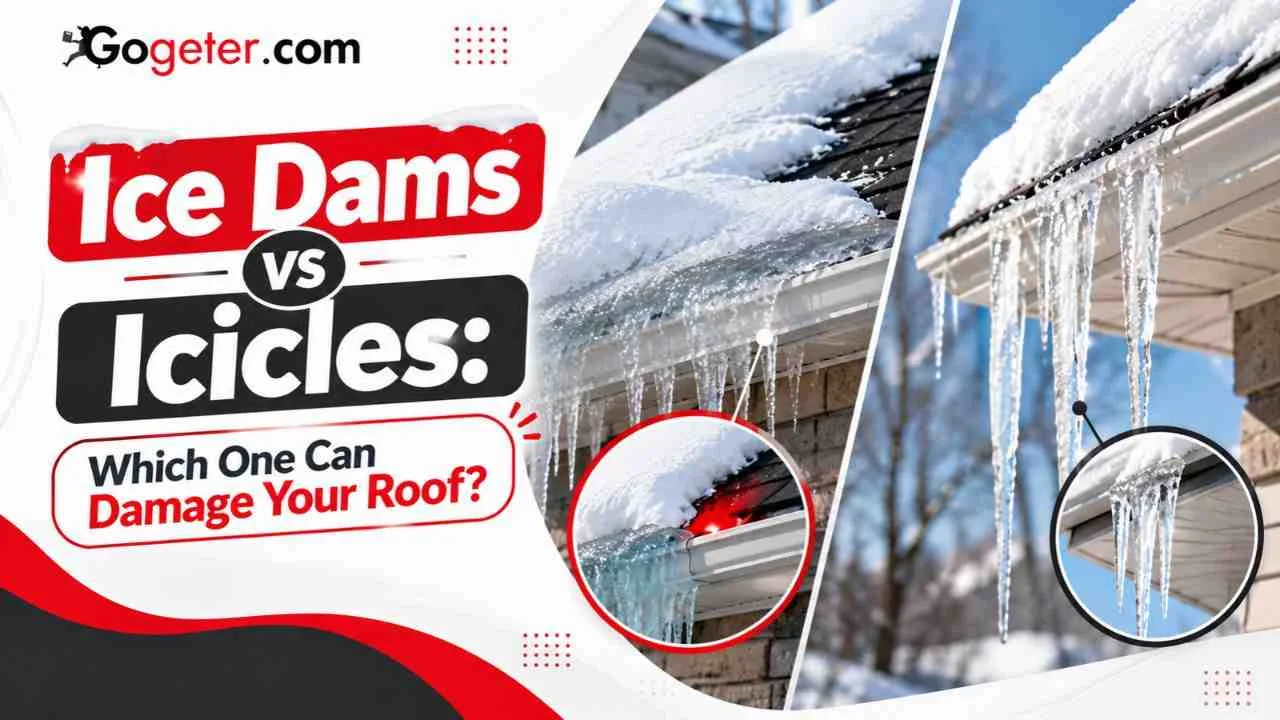
After heavy snowfall, a neat row of icicles along your gutters is common. But when it comes to ice dams vs. icicles, your driveway view can fool you.
Ice dams trap the melting snow on a roof and can push water under your shingles. Icicles on roof edges are often just everyday melting and refreezing. This guide explains how each forms, how to tell them apart, and which warning signs to look for. You’ll also see what damage they cause, how to prevent it, and when to call a pro.
Some icicles are harmless, while others signal a roof problem. To tell the difference, start by understanding what an ice dam is.
What Are Ice Dams on a Roof?
An ice dam is a thick ridge of ice that forms along a roof's bottom edge. It acts like a wall, blocking melting snow from draining off, so the water pools behind it with nowhere to go.
That trapped water is the real concern with ice dams. Over a few cold days, it can slip between shingles and start working its way into your home.
What Causes Ice Dams to Form Along Roof Edges?
Most ice dams start inside the house, not on the roof. Warm air from your living space rises into the attic and heats the roof deck from below. Snow on the upper roof melts, and the water runs down toward the eaves. Since the eaves hang past the warm walls, they stay cold, so the water refreezes there and the ridge grows each day.
So what keeps ice dams coming back? Poor attic insulation, weak ventilation, and air leaks around lights or vents all feed this cycle. A long freezing spell after heavy snow then gives the ice time to build.
How do icicles get on roofs?
Ice forms when water drips off a surface and freezes before it can fall. Each drop adds a thin layer, so they get longer and thicker over time. They can be fed by sunlight on snow, pipes that are too full, and the heat in the attic. Because they overlap, ice dams and icicles can appear together and be easy to mix up. Since both start with melting snow, the real question is which one is on your roof.
How Do You Tell an Ice Dam From Icicles?
The easiest way to tell ice dams from icicles is to look at where the ice sits. Icicles hang down from an edge, while an ice dam sits on the roof itself, usually as a solid band along the eaves. Once you spot that, the rest of the differences between ice dams and icicles fall into place. Here’s how the two compare side by side.
| Feature | Ice Dam | Icicles |
|---|---|---|
| What it is | Thick ridge of ice at the eaves | Hanging spikes of ice from an edge |
| Where it forms | On the roof surface, along the lower edge | Off gutters, eaves and overhangs |
| Main cause | Attic heat melting snow unevenly | Dripping meltwater refreezing |
| How it looks | Solid band, often with snow or water behind it | Separate spikes of different lengths |
| Damage risk | Higher: leaks, shingle and gutter damage | Lower, but falling ice is a safety risk |
| Usual fix | Insulation, ventilation, professional removal | Gutter care, snow raking, checking the cause |
In short, icicles grow down while ice dams build up. A thick shelf of ice with snow piled behind it points to an ice dam, not just a few harmless icicles.
Do All Icicles Mean an Ice Dam on Your Roof?
Not every icicle is a warning sign, and icicles don’t always mean ice dams. A few small, even icicles on a sunny afternoon are usually just snow melting in the sun and refreezing at the edge.
So, are icicles a sign of ice dams? They can be when they’re thick, heavy, and back in the same spots every winter. That pattern often points to heat escaping through your roof. Ice dams and icicles often show up together. Large icicles can be water spilling over the top of a dam, so treat big ones as a cue to check the roof edge more closely. Knowing the difference is step one. Next, spot the signs before water gets inside.
Signs of Ice Dams on Your Roof to Check
This winter, most ice dams leave clues long before they leak. The trick is knowing where to look: start outside from the ground, then move to the attic and the rooms just below the roofline. Catching these signs early can save you a much bigger repair later.
Which Signs Show Up Outside the House?
You don’t need a ladder to spot the first signs of ice dams along roof edges. A quick look from your yard or driveway after a snowfall can tell you a lot
- A thick ice ridge along the eaves.
- Large icicles in the same spots each winter.
- Water dripping behind the gutters instead of off the front.
- Snow melting high on the roof but staying frozen at the edge.
One of these alone may not mean much. When two or more show up together, they usually point to an ice dam.
Should you also check the attic for leaks?
Yes, because some signs appear only indoors. Start with the ceilings and upper walls along exterior walls, where brown stains, peeling paint, or bubbling drywall often appear first. In the attic, look for damp or flattened insulation, frost on the underside of the roof deck, and a musty smell.
Each one tells you warm air and moisture are getting where they shouldn’t. These signs matter because trapped water can do serious damage once it gets inside.
Can Ice Dams Cause Roof Leaks and Water Damage?
Yes, and the damage often starts long before you see a drip. Water pooling behind an ice dam has nowhere to drain, so it backs up the slope and slides under your shingles. That’s how most ice-dam roof leaks begin.
So, how do ice dams cause roof leaks? Shingles are designed to shed water running down, not water pushing up from beneath. Once it gets underneath, it soaks the roof deck, drips into the attic, and works its way into your walls and ceilings.
Over time, ice dam roof damage adds up. Wet insulation loses its warmth, wood starts to rot, and lingering moisture invites mould.
How Ice Dams Damage Gutters and Shingles
Your gutters usually take the first hit. The link between ice dams and gutters comes down to weight and blockage.
When ice dams form in gutters, the weight of solid ice pulls on the brackets and the fascia board behind them. Gutters can sag, pull away, or tear loose, and clogs from leaves and debris only give the ice more to grip.
Ice can also lift and crack shingles, which you may not notice until the thaw. If your gutters already look strained, a gutter repair pro on GoGeter can check them before the next storm.
Are Icicles Dangerous for Homeowners?
The bigger risk with icicles is to people, not the roof. A heavy icicle falling from a second-story edge can cause real injury, especially over doorways, walkways, and driveways.
So, can icicles damage your roof? Rarely on their own, but large clusters add weight to your gutters, so it helps to keep them small and away from busy areas.
The good news is that you can prevent most of this damage with a few smart fixes.
Best Ways to Prevent Ice Dams and Icicles on a Roof
The goal is to keep your roof cold and even. When the whole roof stays close to the outdoor temperature, snow melts slowly instead of refreezing at the edges. That idea sits at the heart of preventing ice dams on a roof.
Does Attic Insulation Really Make a Difference?
It’s one of the most effective changes you can make. Sealing air leaks around light fixtures, vents, and attic hatches keeps warm air from reaching the roof deck.
Good insulation then keeps heat in your living space, while soffit-to-ridge vents keep the attic cool. ENERGY STAR guidance points to these same steps as a place to start, and they can also help with high energy bills. A GoGeter insulation pro can show you where your attic is losing heat.
Simple Steps to Prevent Icicles on Your Roof
Outside the attic, a few seasonal habits keep meltwater moving instead of freezing at the edge. They’re easy to fit into your fall and winter routine:
- Clean your gutters before winter, so meltwater drains freely.
- Keep downspouts clear, so water flows away from the house.
- Use a roof rake from the ground to pull snow off the lower few feet after heavy storms.
Less snow at the edge means less meltwater, the simplest way to prevent icicles on roof edges. Here’s a quick look at how to prevent ice dams and icicles, method by method, and who should handle each one.
| Prevention Method | What It Fixes | DIY or Pro |
|---|---|---|
| Attic air sealing | Stops warm air reaching the roof | Pro recommended |
| Added insulation | Keeps the roof deck cold | Pro or skilled DIY |
| Better ventilation | Evens out roof temperature | Pro |
| Roof rake after snow | Removes snow before it melts | DIY from the ground |
| Gutter cleaning | Lets meltwater drain away | DIY or pro |
| Heat cables | Keeps drainage channels open | Pro install advised |
| Ice and water membrane | Blocks leaks under shingles | Pro, during re-roofing |
Attic fixes stop the cause, while roof and gutter care manage the symptoms. Doing both gives you the best results. Prevention works best before the snow arrives. But what if an ice dam is already sitting on your roof?
Will Ice Dams Melt on Their Own?
Eventually, once temperatures rise and stay above freezing. The catch is the wait. While the dam melts slowly, the water trapped behind it can keep leaking into your home, so leaving it alone is a gamble.
Safe Ways to Remove Ice Dams From a Roof
Start from the ground. A roof rake clears snow from the lower part of your roof, and less snow means less meltwater feeding the dam.
If you’re wondering how to remove ice dams from roof edges without damage, a simple trick helps. Fill a nylon stocking with calcium chloride ice melt and lay it across the dam so one end hangs over the edge. It slowly cuts a channel for trapped water to drain.
For thick dams, professional steam removal is the safest choice, since it melts the ice without harming your shingles.
Which Removal Methods Damage Your Roof?
Some quick fixes cause more harm than the ice itself. Chipping at a dam with a hammer, axe, or shovel can crack shingles and dent gutters. Rock salt (sodium chloride) can damage shingles, metal flashing, and the plants below.
Hot water doesn’t help either, since it just refreezes. And climbing a ladder onto an icy roof is the biggest risk of all. So, is it safe to break off icicles yourself? Only small ones you can reach from the ground. Anything higher or heavier is best left to a pro.
Some situations are simply past the DIY point, and that’s when a pro comes in.
When Should You Call a Roofer?
If water is already getting inside, or the ice sits too high to reach safely from the ground, it’s time to bring in help. A roofer can remove ice dams without damaging your roof and find the heat loss behind them.
Use this quick guide to decide your next step.
| Situation | What to Do |
|---|---|
| Small icicles at eye level | Safe to handle carefully yourself |
| Light snow on a low roof | Use a roof rake from the ground |
| Thick ice ridge, no leak yet | Book a roofer for steam removal |
| Water stains inside | Call a roofer quickly |
| Sagging or loose gutters | Call a gutter or roofing pro |
| Ice dams every winter | Get an attic insulation check |
As a rule of thumb, small icicles are a DIY job. Leaks, thick dams, and problems that return every winter need a professional.
Where Can You Find Roofing Pros Near You?
GoGeter makes it easy to find local providers who handle winter roof problems. Browse roofers, gutter specialists, and insulation pros in your area and contact them directly.
Start with roofing services on GoGeter for ice dam removal and roof repairs. Then look at gutter and insulation pros to fix the cause before next winter. If water is already coming in, our emergency roof repair guide walks you through what to do first.
Once the right help is lined up, here’s what to keep in mind before the next snowfall.
Conclusion
As the comparison table shows, the difference between ice dams and icicles comes down to where the ice sits and what it’s doing. Icicles hang from the edge and are often just a symptom.
The ice dam is the real problem, trapping water that can leak into your home. When large icicles keep returning to the same spots, take it as a cue to look closer. Fix the heat loss in your attic, keep your gutters clear, and call a pro once water gets inside. A little care before winter goes a long way toward keeping your roof calm and dry all season.
For quick answers to common questions, head to the FAQ section below.

Discussion 0
Comments are open to signed-in members soon.