











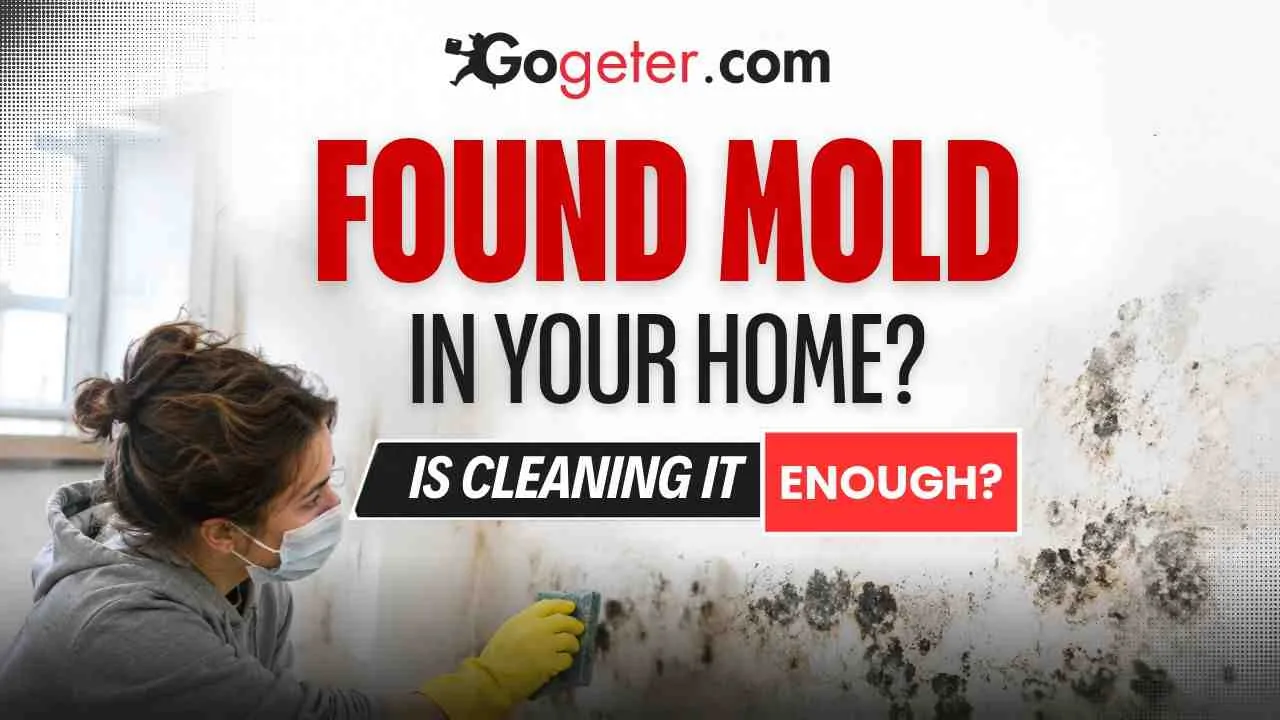
Usually it starts with something small. A dark patch appears on the bathroom ceiling. Or the basement smells musty even after you air it out. These are some of the most common signs of mold in your house, plus two basic questions: How bad is it? Who do you call?
Most people’s first question is, What is mold remediation. Mold Remediation is the professional approach to locate mold, stop the spread of mould, and safely clean up mould. The mold removal process usually includes washing the visible spots. The full mold remediation process goes above and beyond by repairing the moisture that allowed the mould to grow in the first place.
The guide explains everything in clear language. You'll learn the warning signs to look for and the 7 actions professionals follow. You’ll also discover how long the process normally takes, and when a little DIY cleanup is fine and when the job needs a pro. But before we get to all that, most people get one thing wrong about mould. If you get it right, it affects the way you do the whole job.
What Is Mold Remediation and How Is It Different From Mold Removal?
Mold remediation is the process of finding mould in a property, stopping it from spreading, properly removing it and repairing the moisture that caused it to grow. Once it’s complete, the mould in your home is returned to a safe, normal level.
Why normal and not zero? Mold spores are everywhere: in the air, inside and out. They are so small that no one can get rid of them completely. The true purpose is to keep mould in check.
Mold Remediation vs Mold Removal: What’s the Real Difference?
Think of mould as weeds in a garden. Mold removal is like pulling out the weeds you see. Remediation pulls them out, too, and makes the wet soil that allowed them to grow, so they’re less likely to come back.
Remediation may also include containment (plastic walls to confine spores to one area), air cleaners and antimicrobial treatment that help prevent regrowth. Companies often use both terms for the same service, so when comparing mold remediation versus mould removal, always ask what the task involves.
| Feature | Mold Removal | Mold Remediation |
|---|---|---|
| Main goal | Clean the mold you can see | Control mold and fix why it grew |
| Fixes the water problem? | Rarely | Yes |
| Stops spores from spreading? | Usually not | Yes, with plastic walls and air cleaners |
| Chance mold comes back | Higher | Lower |
| Best for | Small spots on hard surfaces | Big, hidden, or returning mold |
Can Mold Ever Be Completely Removed From a Home?
No. Spores get in through open doors and windows, and they hitch a ride on your clothes, your shoes, even your pets. Be careful if a company guarantees “100% mold removal” because no one can make that promise.
A professional mold repair and removal procedure will bring mould back to normal levels and remove the water it needs to develop. Later, you will learn that water determines whether mould comes back. So mold remediation is the true solution. But how do you know if you need it? Mould doesn’t always reveal itself.
What Are the Signs of Mold in Your House?
The simple clue is spots on a wall. But most mould grows where you can't see it, such as behind walls, under floors or within air ducts. That's why your nose often smells mould before your eyes do.
Visible and Hidden Warning Signs of Mold
Most mold signs in a house develop slowly, so they are easy to ignore at first. Look for these:
- A musty, earthy scent. This is created by gases that growing mold emits, called MVOCs
- Black, green, white or grey patches (the dark ones are often dubbed black mould)
- Bubbling or peeling paint Brown water streaks on walls and ceilings
- Sneezing or a stuffy nose that gets better when you’re not at home
You smell mould but can’t find it? A mould check can reveal hidden growth behind walls or under floors.
Where Mold Hides: Attics, Crawl Spaces, HVAC Systems and Apartments
Mould grows best in wet areas with little air movement. It grows well on condensation and high relative humidity (the amount of moisture in the air). Even in apartments, mold can travel from a neighbour’s leaky pipe through shared walls.
That’s why attic mold remediation, mold remediation in crawl spaces, HVAC mould remediation and apartment mold remediation are some of the most popular services pros do.
| Area | Why Mold Grows There | What to Check |
|---|---|---|
| Attic | Warm, damp air gets trapped under the roof | Dark stains on wood, damp insulation |
| Crawl space | Damp soil and little airflow | Wet beams, musty smell |
| HVAC/air ducts | Condensation forms inside the system | Musty air when the AC runs |
| Bathroom | Shower steam and a weak exhaust fan | Grout, caulk, ceiling corners |
| Basement | Cool, damp, and below ground | Lower walls, stored boxes |
| Apartment walls | Leaks from shared pipes | Stains or bubbling paint |
Have one of these signs? Don’t go for the bleach just yet. One simple test will tell you if you can do it yourself.
When Is Mold Remediation Necessary?
The measurement is the size of the mouldy area. Small patches are usually DIY projects, but larger ones, or mould in certain places, require a mold treatment professional.
The 10-Square-Foot Rule: DIY Cleanup or Professional Help?
The EPA says you can generally clean up mould yourself if it covers less than about 10 square feet. That’s about a 3-foot-by-3-foot patch. If it’s any larger, expert mold cleanup is usually required. For modest projects, clean hard surfaces (tile) with detergent and water, using PPE (N95 respirator; gloves and goggles).
Do not bleach. EPA does not suggest it for routine mould cleanup, and it cannot penetrate mould developing inside porous materials such as drywall or wood. If you have asthma, severe allergies or a compromised immune system in your home, don’t clean mold yourself, even a small spot.
Is Black Mold More Dangerous Than Other Mold?
“Black mold” is a common name for Stachybotrys chartarum, a dark mold that grows on highly damp substrates. It attracts a lot of attention because some moulds can produce mycotoxins that can make you sick.
The CDC says a mould's colour doesn't determine how dangerous it is, and all mould should be cleaned the same way. Whether you need a pro for black mold removal depends on the mold patch size, what it’s growing on, and who lives in your home. Not sure when your property requires mould remediation? This is a helpful quick check.
| Situation | DIY Cleanup OK? | Call a Mold Remediation Professional? |
|---|---|---|
| Small patch on tile or grout | Yes, with PPE | Only if it comes back |
| Area over 10 sq ft | No | Yes |
| Mold on drywall or insulation | No | Yes, it usually needs cutting out |
| Mold inside HVAC or ducts | No | Yes, and turn the system off |
| After flood or sewage water | No | Yes |
| Health-sensitive household | No | Yes |
| Mold keeps returning | No | Yes, to find the hidden water source |
If you're in the "call a pro" column, you likely want to know what happens once the team walks in.
How Does Mold Remediation Work? 7 Mold Remediation Steps
Every home is different, so no two mould jobs are ever the same. But a good mold remediation contractor still follows the same order of actions, based on the IICRC S520, a handbook that acts like a rulebook for pros. Every phase is there for a reason and if you skip one mold usually comes back.
Steps 1–3: Mold Inspection, Moisture Repair and Containment
The first step of mold remediation is preparation. You don't start scraping mould on day one.
- First, mold inspection. The crew inspects the area, uses a moisture meter to locate wet patches inside walls, and may test the air. Then they write down what needs to be done.
- Then they fix whatever allowed the water in. It can be a leaking pipe, a break in the ceiling, or a bathroom without a fan. As we told you before, if the water lingers, the mould will stay too.
- They then seal the moldy area with a containment barrier, which is basically thick plastic put over entrances. Fans pull air into the enclosed space (this is called negative air pressure) so spores can’t float out into the rest of your home.
In older homes, the crew may also be checking for asbestos or lead paint before chopping into anything.
Steps 4–7: Air Filtration, Removal, Drying and Clearance Testing
Now this is where it gets messy. If you’ve ever wondered what mold remediation looks like, you’re probably imagining this part of the job: plastic over the doorways, machinery humming in the corner, a crew in respirators taking out walls.
- A HEPA air scrubber runs across it all, non-stop. Its filter captures 99.97% of the particles in the room, including spores, so what the crew kicks up is removed from the air rather than landing somewhere fresh.
- Wet drywall goes out. So does saturated insulation and any carpet the mould has seeped into. Porous stuff like that can't be cleaned deep enough to trust. The crew sacks it inside the containment area before hauling it out. Whatever is left the studs, tile or concrete- is cleaned down and treated with an antibacterial treatment.
- Then comes the drying. Dehumidifiers and fans are used until the humidity is pulled down to between 30% and 50%, and on a thoroughly wet job, it can take days.
- No one relies on a hunch. The inspector walks the area and does post-remediation clearance testing by examining surfaces and taking air samples to ensure the space is safe to use again.
Once you pass that test, the rebuild begins with new drywall and a coat of paint. Each of these mold remediation processes is dependent on the previous one. A professional firm will follow this process of mold remediation in this order. Seven steps. Sounds like a lot, huh? So how much time will it actually take up in your week?
How Long Does Mold Remediation Take?
Most mold remediation takes from 1 to 5 days. A small, contained job could be done in a day or two. Large or structural damage can take one to three weeks, depending largely on how long the space takes to dry and how much needs to be rebuilt.
Typical Mold Remediation Timelines by Job Size
If you ask any crew "how long does mold remediation take?" you’ll get the same answer: it depends. Usually, if drying is the jam, moist framing doesn’t care about your timetable. Mould inside the HVAC system adds days of ductwork to everything else. One failed clearance test means the team is back in, and waiting for new drywall or flooring pushes the finish line further out.
| Job Size | Typical Area | Estimated Time | Can You Stay Home? |
|---|---|---|---|
| Small | A patch on one wall or corner | 1 to 2 days | Usually yes |
| Medium | One room, attic, or crawl space | 3 to 5 days | Often, if it’s sealed off |
| Large | Several rooms or structural damage | 1 to 3 weeks | Usually no |
| HVAC/whole-home | Ducts plus multiple areas | Varies with system size | No |
Can You Stay Home During Mold Remediation?
For a little job behind plastic, sure. Most people keep still and barely notice the crew. But big occupations affect numbers. Once mold remediation companies start breaking into multiple rooms or shutting off your HVAC, arrange to stay with family or rent a hotel.
And if you’ve got kids, dogs or anyone who struggles to breathe, don’t think twice about leaving. Call your insurer before you book anything. Some homeowners policies will pay for your temporary housing while mold remediation treatments are being done. Once the crew has packed up and the clearance test has been passed, the only concern is: has the mold gone for good?
Can Mold Come Back After Remediation?
Yes, it can. The success of proper mould remediation comes down to one thing, and you already met it in Step 2: water. Fix the moisture, and the mould has no food to feed on.
Why Mold Returns After Remediation
Most of the time, someone skipped a step. Maybe they never fixed the sink leak. Maybe the air in the basement was still sticky and moist. Some crews bypass the clearance exam. Some coat wet mold with an encapsulant, a sealing paint, only to mask the problem until it grows right back through.
So can mold come back after remediation? Only if the worker skipped any steps. Good contractors spray on an antimicrobial treatment, install moisture-resistant drywall where water loves to gather, and come back later to inspect their job. That’s actual mold remediation and removal.
How to Keep Mold From Coming Back
Your job is easier than you think. Mould loves water, so remove the water.
- Maintain a relative humidity (the amount of moisture in the air) between 30% and 50%
- Whenever you shower or cook, run the bathroom and kitchen fans
- Dry leaks and spills within 1-2 days
- Have your HVAC system serviced once a year
Preventive measures prevent mold. But once you’ve passed that point, it’s up to the individual you hire to figure out how to handle it.
How to Choose a Mold Remediation Specialist
A general contractor can spend all day hanging drywall. But mould is a different kind of work. If you hire someone who doesn't know how to contain spores or find the source of the water, the problem may come back in a few months, and it can be worse than before. That’s why you look for an expert mold remediation specialist.
Questions to Ask Mold Remediation Companies Before Hiring
Before you sign anything, you should ask mold remediation company a few easy questions. Are their workers IICRC-certified? Do they have a state license? Texas, Florida, and New York all need one. Will they correct what caused the mould, or clean it? Do they do a clearance test at the end? Do they have insurance documentation and a detailed strategy for the job?
In other places, including Texas and New York, a business that inspects your home can’t be the same company that handles the cleanup. That rule prevents anyone from creating additional work.
Beware of any group that promises “100% mold removal.” As you read before, no one can make such a commitment. Need help quickly? Compare local verified mold cleanup providers on GoGetter.
At the same location, you may have plumbers to fix leaks and HVAC professionals to repair ducts so both the mould and its cause are removed. If you have a leak or flooding happening, don’t wait. Mold can begin to grow in as little as 24-48 hours.
Final Thoughts on Mold Remediation
Mold never leaves a home entirely. But if you can control it, then it is no longer a problem. Good mold treatment goes under the water so you’re fixing the source of the stains in the first place.
Notice a little dot on tile or grout? Wear gloves and a mask, wash it with soap and water and keep an eye on it. If it’s more than 10 square feet, keeps coming back, is inside your HVAC, or someone in the home has breathing issues, schedule a mould inspection and let a contractor handle the entire mould treatment process.
You don't have to let the stale smell that led you here become a bigger problem. You know the signs of mould in your house, what the cleanup entails, and who to call. When you are ready, GoGeter can connect you with trusted local pros in your area.
Discussion 0
Comments are open to signed-in members soon.