












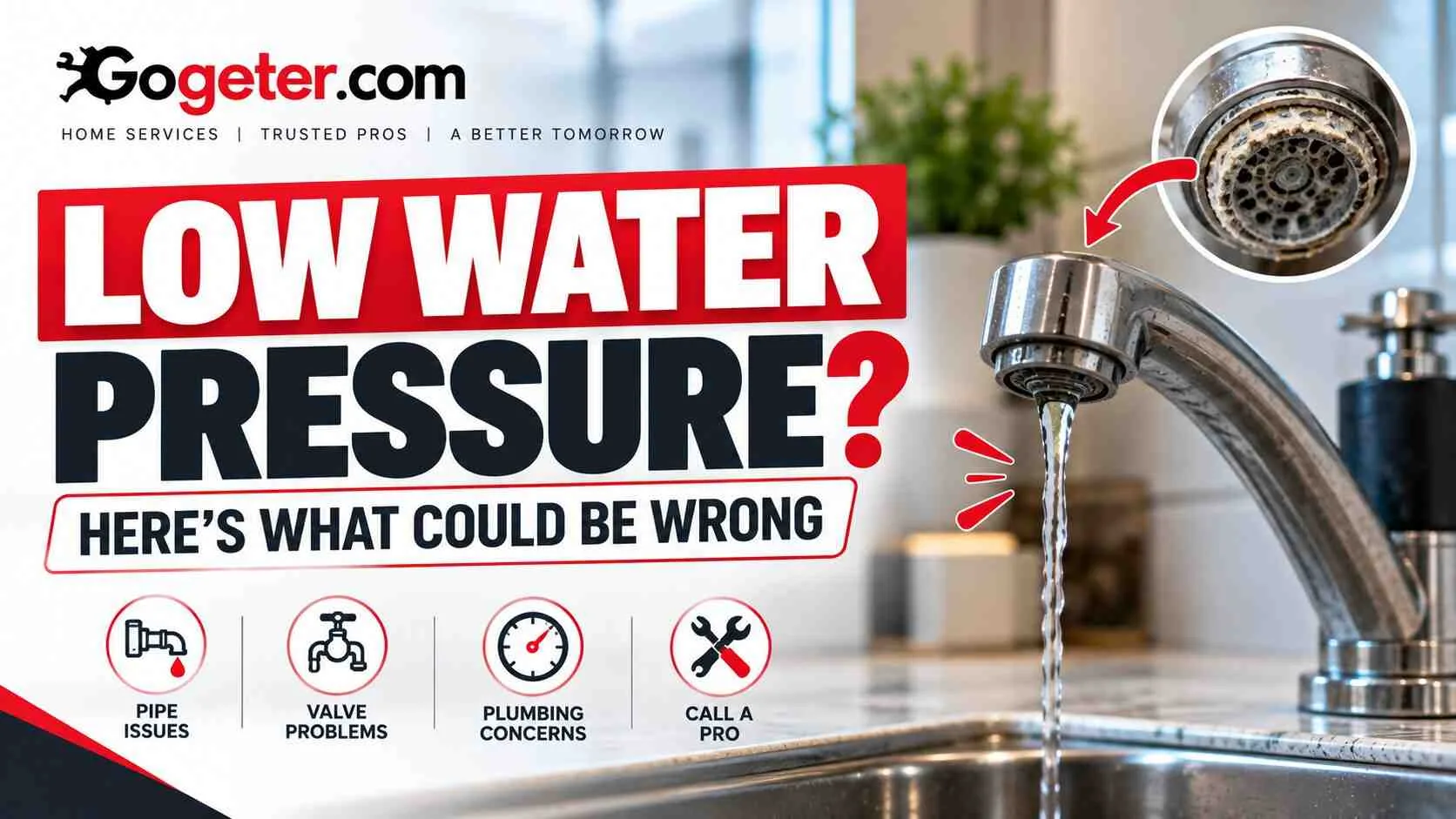
You turn on the shower and get a sad little drizzle. So why is my water pressure so low? Good news: low water pressure in a house is nearly always due to something, and you can often detect it yourself.
There are six common reasons for low water pressure: A clogged showerhead or faucet tip; a water valve that’s not fully open; a worn-out pressure regulator; pipes clogged with minerals or rust; a hidden leak; and an issue with your city’s water.
Whether it’s low water pressure from the shower or the whole house, this article will assist you in locating the cause and knowing when to call a plumber. It starts with a simple question that takes 30 seconds to answer. First, make sure your pressure is low, and not just lower than your normal.
What Does Low Water Pressure Mean?
Water pressure is how hard water pushes through your pipes, and it's measured in PSI (pounds per square inch). Low water pressure means that push is too weak to do its job. Normal house water pressure is 40 to 80 PSI, and 55 to 65 is optimal. If you have less than 40 PSI water pressure in your house, it is low.
Most plumbing rules in the US don't allow anything over 80 PSI. It's simply too high and can wear out pipes and appliances. The most frequent symptoms of low water pressure at home are easy to spot: a weak shower, a toilet or tub that fills slowly, pressure that drops as someone flushes, and a washing machine that takes forever to fill. If you notice these signs of low water pressure in your home, it's time to test it.

How to Check Water Pressure at Home
You can generally get a hose-thread pressure gauge for under $15 at a hardware shop. First, test indoors. Shut off the cold valve of the washing machine, detach the hose and attach the gauge. Open the valve with no water running anywhere and read the number. Have a towel handy.
Then try an outdoor spigot in the same way. If the two values are not the same, remember that. It's a signal that we'll revisit. One more thing: a pressure gauge, not a flow gauge. So if you have a proper reading at one tap but the water pressure is weak, something is obstructing the water there.
What Your Indoor Gauge Reading Means
| Indoor Gauge Reading | What It Means | Next Step |
|---|---|---|
| Below 40 PSI | Low pressure | Check your valves and regulator |
| 40–55 PSI | Normal, on the low side | Check individual taps |
| 55–65 PSI but weak taps | Pressure is fine, flow is blocked | Clean faucet tips and showerheads |
| 65–80 PSI | Normal, on the high side | No action needed |
| Above 80 PSI | Too high | Call a plumber about your regulator |
These readings are for your indoor test, not the outdoor spigot. If your reading is low, or your taps clearly are, the next step takes 30 seconds and narrows everything down.
Low Water Pressure in One Fixture or the Whole House?
Here's that 30-second question: Is the low pressure in one place or everywhere? The quickest way to find out why you have low water pressure in your property is to answer it.
Ask your neighbours before testing anything. If others have poor water pressure too, then the problem is in your region, not your house. It could be a main break, city maintenance, or busy hours when everyone is consuming water. Check your water utility's website, and you might skip calling a plumber.
Quick Test: Which Taps Are Affected?
Run the cold water at the kitchen sink, then a bathroom sink, then the shower. Then compare hot and cold in a single tap. If only one tap is weak, it’s the fixture and usually the easiest fix.
If the problem is low water pressure throughout the house, the source is bigger: your supply, a valve, the pressure regulator or your pipes. Refer to the table below to match what you noticed to the likely cause, then refer to that section.
Match Your Symptom to the Likely Cause
| Where You Notice It | Likely Cause | Go To |
|---|---|---|
| One faucet or shower | Clogged faucet tip or showerhead | Shower and sink causes ↓ |
| Only hot water | Water heater problem | Hot water causes ↓ |
| Only upstairs | Height or pipe size | Upstairs causes ↓ |
| Whole house, neighbors too | City supply problem | Call your water utility |
| Whole house, only you | Valve, regulator, pipes, or leak | Whole-house causes ↓ |
| Suddenly, everywhere | Leak, valve, or city work | Sudden drops ↓ |
| After a repair or new appliance | Debris or a half-closed valve | After a repair ↓ |
The most common setup is one tap, one shower, and one water source.
Low Water Pressure in the Shower, Sink, or Hot Water Only

If any one tap, or one kind of water, is weak, that’s good news. These are the most common causes, and most are cheap or free to fix. Why Is My Shower or Kitchen Sink Pressure Low? Low water pressure in the shower, kitchen sink, or bathroom sink often comes from a clog at the fixture.
- A clogged faucet tip. The little screen on the end of your faucet is called an aerator, and it captures grit and minerals. Unscrew it, rinse it, and soak it in white vinegar for an hour.
- A crusty showerhead. The build-up of minerals clogs the little openings. Soak in vinegar overnight, and you will typically feel the change immediately.
- Low-flow shower head. Federal laws restrict new showerheads to 2.5 gallons per minute, and some use even less. A low-flow head is not broken; it works as designed. And don’t remove the flow restrictor. It rarely solves a serious pressure problem.
- Used part or half-open valve. Inspect the shut-off valve under the sink. If it's wide open and cleaning didn't help, the faucet itself may need to be replaced.
When Only Hot Water or Upstairs Pressure Is Low
Hot water only: If your hot water pressure is less than your cold water pressure, the water heater is nearly always the problem. A valve on its supply line may be half closed, sediment in the tank, or clogged fittings on top may be the cause. Tankless heaters can potentially clog at their inlet filter. So yes, a water heater can produce low water pressure, but only on the hot side.
Cold water only: Check the cold water supply valve under the sink. Usually it is partially closed, or the cold line is blocked.
Upstairs only, a minor drop is common. Water drops roughly .43 PSI per foot of elevation. So a second story will naturally be 4 to 5 PSI less. A considerable drop upstairs but not below generally suggests pipes are too small or rusted. If the weak pressure is everywhere, not just one tap, the problem is somewhere between your meter and your fixtures.
What Causes Low Water Pressure in the Whole House?
If the whole house has poor water pressure, the problem isn’t just one fixture. It sits between the street and your tap. These are the most common causes of low water pressure in a home.
Shutoff Valves and Pressure Regulator Problems
- A primary valve not completely opened. Your house has a main shutoff valve that controls water coming in. If it didn't get fully opened, the whole house will get less water after plumbing maintenance or a move. That’s the number one cause of low water pressure.
- Meter valve. This is your water company’s. If it appears closed, call them; don’t break it open.
- A worn-out pressure regulator. Many houses have a bell-shaped valve that reduces high street pressure to a safe level. If one fails, the pressure is off for all of them. Two gauge readings, remember? If the pressure in the house is low but it is not low outside, it is typically the regulator.
- Backflow device stopped working. Some homes on the main line have one, and if a part gets trapped, it can slow down the flow. A regulator is the plumber's job to fix or replace.

Old Pipes, Hidden Leaks, and Hard Water Buildup
- Old pipes, rusty. Older homes, especially those built before the 1960s, often include steel pipes that corrode on the interior. Rust shrinks the room for water. A telling sign: Water pressure starts high, then declines.
- Hard water deposits. Minerals, like plaque, build up inside pipes over time. It’s common in hard-water areas like Arizona and much of the Southwest.
- A secret leak. Is your house losing water pressure? You can have a water leak under the floor, inside a wall, or in the yard. To check, turn off all taps and water appliances, then check your water meter. The leak indicator is a little triangle or a dial. If it is whirling, water is moving somewhere.
- Private well homes. A pressure switch, a waterlogged pressure tank, or the well pump are the usual causes of low pressure. They need a well or a plumber. Then there is the other kind of low pressure, the kind that crops up overnight, or right after something changed.
Why Is My Water Pressure Low All of a Sudden?
Low water pressure can be scary, but it typically has a quick reason. The trick is understanding when to wait, when to move swiftly. If you notice your water pressure drop overnight, check with your neighbours first.
Sudden Drops, and When They're Urgent
The most likely cause is city work or a major break, and your utility’s website will usually tell you this. If it’s simply your house, a leak can be the culprit. Meter test, remember that?
If there is a leak, the signal will spin, and everything will be off; water is getting out somewhere. If you see damp spots on walls or floors, hear running water or see puddles in the yard, move swiftly. Switch off your main valve, then call a plumber immediately. Find an emergency plumber on GoGeter.
Low Pressure After a Repair, New Water Heater, or Softener
If your water pressure dropped off a cliff shortly after a change, the change is likely the culprit. First, clean the faucet tips, since they typically get clogged with loose debris after a plumbing repair. Make sure all the valves are fully open.
Sometimes, after changing a water heater, the supply valve isn't fully open. Yes, water softeners can produce low water pressure if the filter is blocked or the bypass valve is adjusted incorrectly.
| Pressure Pattern | Likely Cause | What to Do |
|---|---|---|
| Overnight, neighbors too | City supply or main break | Call your utility |
| Overnight, just you | Leak, valve, or failed regulator | Meter check, then a plumber |
| Right after plumbing work | Debris or a closed valve | Clean faucet tips, check valves |
| Slowly over months | Mineral buildup or rusty pipes | Book a plumber inspection |
| Starts strong, then fades | Clogged pipes or regulator | Book a plumber inspection |
| Comes and goes | Busy hours or failing regulator | Note the times, call a plumber |
You probably know your pattern by now. Here’s what you can do yourself, and when to pass it over.
How to Fix Low Water Pressure, and When to Call a Plumber
Now that you know what’s probably causing the problem, here’s how to fix low water pressure in your home, starting with the free things. Simple tips to increase water pressure in your home Give these a try first. These take a few minutes for most people and cost nothing.
- Turn the main valve all the way on and then back a quarter turn so it won’t stick.
- To clean mineral buildup, soak faucet tips and showerheads in white vinegar.
- Check the tiny valves under sinks and toilets to make sure they are wide open.
- If you have a water softener, check it out. Check the bypass valve & the filter.
- Water usage staggered. Running the shower, washer and dishwasher at the same time spreads the pressure.

Here are a few things to avoid: don’t try to change the pressure regulator yourself, don’t pour chemical cleaners into the supply pipes, and don’t remove the flow restrictor from your showerhead. None of them safely increase water pressure.
Who to Call for Low Water Pressure in Your House
If the quick remedies don’t work, the right call depends on what you found. If your neighbours also have low pressure, or if the meter valve appears to be closed, call your water utility.
If the problem is in your home, if you think the regulator is at fault or if the leak indication on the meter (with everything turned off) is spinning, call a plumber. If you have a private well, call a well pro.
The average cost for a plumber to diagnose and repair low water pressure is between $150 and $450. Replacing a pressure regulator will normally cost between $300 and $650. Need low water pressure repair in your area? Compare local plumbers on GoGeter and get it checked before a tiny problem becomes a leak.
Low Water Pressure Repair Costs
| Repair | Typical Cost | Who Does It |
|---|---|---|
| Clean faucet tips and showerheads | Free | You |
| Plumber service call | $75–$150 | Plumber |
| Diagnose and fix most causes | $150–$450 | Plumber |
| Pressure regulator replacement | $300–$650 | Plumber |
| Main water line repair | $400–$1,500 | Plumber |
| New pipes or booster pump | $1,000–$2,500+ | Plumber |
| Permit, where required | $50–$300 | Homeowner |
A few questions come up in almost every low-pressure situation. Here are quick answers.
Why Your Water Pressure Is Low, and What to Do Next
What causes low water pressure? Where you see it, that’s where the answer is. A gentle tap usually suggests a blocked fixture. If the hot water is weak, the problem is the water heater.
And low water pressure in the whole house is a valve, the regulator, your pipes, or a leak. Start at the beginning. Check your inside pressure, check with your neighbors, clean your faucet tips and shower heads, check your valves.
If none of that works, it’s time to hire a plumber. Low water pressure? It’s a mystery until you know the correct question to ask. Now you know exactly where to start and that converts an annoying drizzle into an issue you can actually fix.
Discussion 0
No comments yet — be the first to share a thought.